The Ad Gentes Mission Today: Building Bridges, Living in Unity

“One in Christ, united in mission” — An invitation to rediscover our missionary vocation.

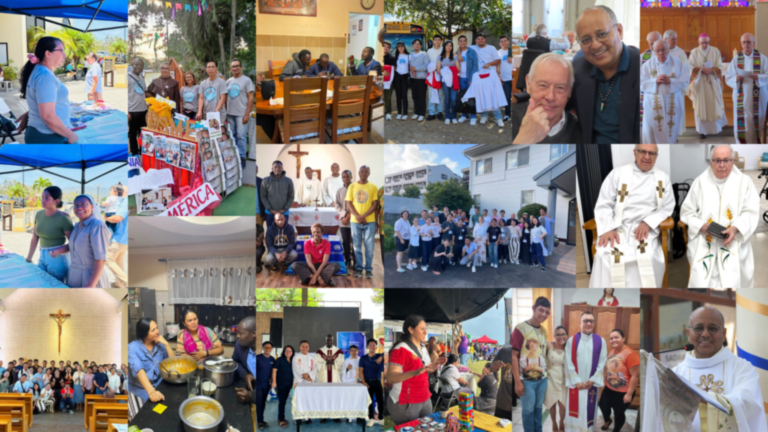
In a world marked by divisions, conflicts, inequalities, and cultural barriers, the mission of the Church remains an invitation to reach out to others and share the love of God revealed to us through Jesus Christ.
In 2026, as we celebrate the centenary of World Mission Day, Pope Leo XIV offers us a theme that invites us to reflect deeply on our identity and responsibility as missionary disciples: “One in Christ, united in mission.”
These words remind us that mission is neither an individual initiative nor a task reserved for a select few. It is a shared vocation, rooted in our union with Christ and expressed through communion, fraternity, and service to others.
But what does it mean to live the Ad Gentes mission today? How can we truly be one in Christ amid our differences? And, above all, what must we transform within our communities to become authentic witnesses to the Gospel?
The Ad Gentes Mission: Reaching Out to Others
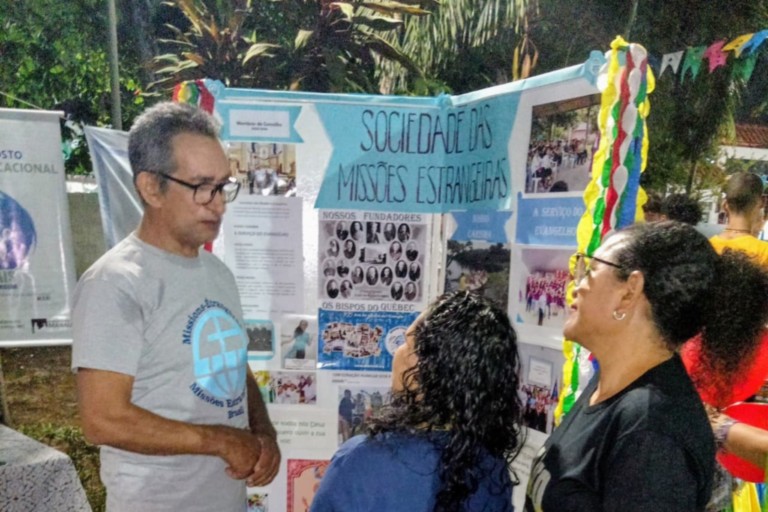
The Latin expression Ad Gentes, meaning “to the peoples,” reminds us of the universal vocation of the Church, sent to proclaim the Gospel beyond its own borders.
In its specific sense, the Ad Gentes mission is directed toward peoples, human groups, and cultural contexts where Jesus Christ and his Gospel are not yet known, or where Christian communities still need to be strengthened in order to live and pass on their faith.
This mission remains as important today as ever. However, it cannot be reduced simply to traveling from one country to another or organizing religious activities in distant places.
Mission is, above all, an attitude of openness, encounter, and willingness to share God's love.
Being a missionary means learning to listen before speaking, to understand before judging, and to approach others with respect, humility, and sensitivity to their realities.
We do not go out to meet other peoples to impose our customs or demonstrate a supposed cultural superiority. We go to share the Good News of Jesus Christ, recognize the dignity of every person, and discover how the Spirit of God is also at work in the human realities we encounter.
In this process, missionaries not only have something to offer; they also have much to learn.
Mission thus becomes a journey of encounter, dialogue, and mutual transformation, where the Gospel is proclaimed through words, but also — and indispensably — through the witness of a life dedicated to serving others.
We Are Not Islands or Builders of Walls: We Are Called to Build Bridges
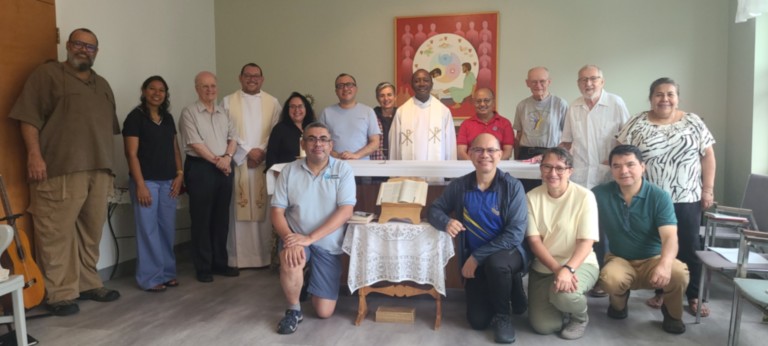
One of the great challenges of our time is overcoming the tendency to withdraw into our own spaces, ideas, cultures, and ways of understanding the world.
This reality can also appear within our Christian communities when differences become reasons for separation, when we defend our own interests at the expense of the common good, or when we stop listening to those who think and act differently.
Without even realizing it, we may end up building walls where we should be opening paths of encounter.
But mission does not call us to put up barriers; it calls us to build bridges.
Bridges between cultures, generations, and communities. Bridges between people with different experiences of faith. Bridges that help overcome prejudice, heal wounds, promote reconciliation, and discover what unites us.
Building bridges does not mean giving up our Christian identity or ignoring our differences. It means learning to embrace those differences through respect, dialogue, and love.
Jesus himself showed us this path. He reached out to those who were excluded, shared meals with people rejected by society, and crossed the cultural and religious boundaries of his time to reveal the Father's merciful love.
For this reason, a truly missionary community cannot close in on itself or remain indifferent to the needs of others.
We are not islands meant to remain separated. We are part of one human family, and we are called to become signs of communion.
Mission begins when we have the courage to step outside our comfort zones, open our doors, and recognize in others a brother or sister with whom we can walk together.
One in Christ: Unity Does Not Mean Uniformity
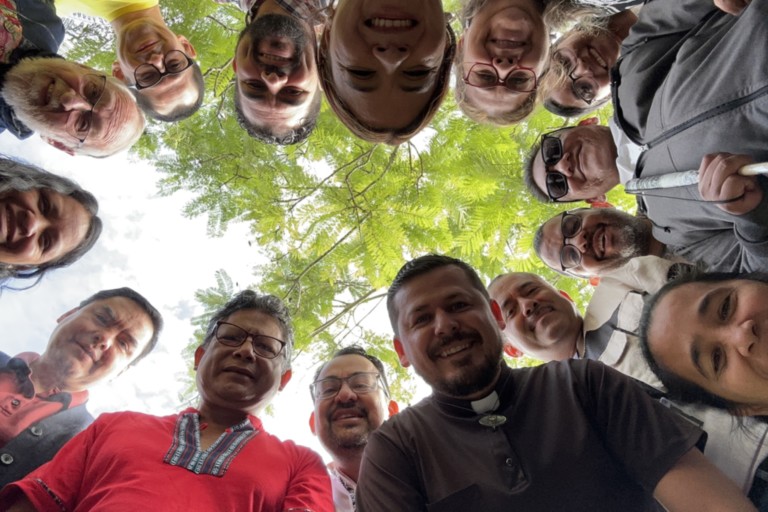
In his message for World Mission Day 2026, Pope Leo XIV invites us to reflect on Jesus' prayer to the Father:
“That they may all be one [...] so that the world may believe that you have sent me” (Jn 17:21).
This prayer reveals that unity is not merely an ideal of peaceful coexistence but an essential dimension of our Christian identity and mission.
However, being one in Christ does not mean that we must all think alike, possess the same abilities, belong to the same culture, or express our faith in identical ways.
True unity does not erase diversity; it embraces it, values it, and transforms it into a shared richness.
In our communities, we encounter people with different backgrounds, perspectives, talents, and vocations. Some proclaim the Gospel through preaching and teaching; others do so through service, education, solidarity, prayer, or accompanying those who suffer.
All these gifts are valuable when placed at the service of one common mission.
Problems begin when we fail to recognize the gifts of others, when we believe that our way of doing things is the only valid one, or when we allow rivalries and personal ambitions to weaken our communion.
A divided community can hardly proclaim a Gospel of love and reconciliation in a convincing way.
For this reason, being united in mission requires us to learn to collaborate, share responsibilities, value different charisms, and recognize that no one can accomplish alone the mission that Christ has entrusted to his entire Church.
Our diversity should become an opportunity to grow together, not an excuse to drift apart.
We Are Not the Protagonists: The Holy Spirit Guides the Mission
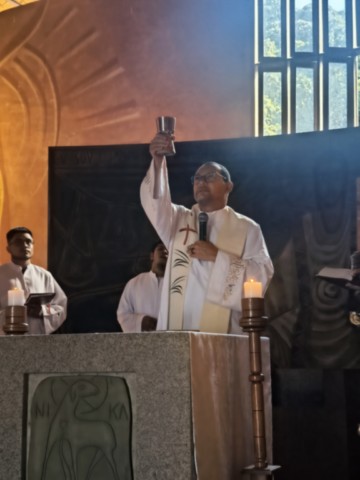
At times, we may fall into the temptation of believing that mission depends primarily on our own efforts, abilities, projects, or achievements.
We focus on organizing activities, developing initiatives, reaching goals, and demonstrating results. Although these efforts are important, we risk forgetting a fundamental truth: the mission does not belong to us.
Mission originates in the love of God the Father, is fully revealed in Jesus Christ, and continues to unfold through the action of the Holy Spirit.
Saint John Paul II, in his encyclical Redemptoris Missio, reminds us that the Holy Spirit is the true protagonist of the Church's entire mission.
We are collaborators, servants, and instruments of this divine action.
This means that we are not called to seek personal recognition, impose our own projects, or place ourselves at the center of missionary activity.
Jesus Christ is at the center of the mission; the Holy Spirit is the one who animates, inspires, and guides it.
It is the Holy Spirit who opens paths where none seem to exist, awakens vocations, strengthens communities, and prepares hearts to welcome the Good News.
Our responsibility is to remain attentive to his presence, discern God's will, and allow ourselves to be guided with humility and trust.
Being instruments of the Holy Spirit requires us to learn to listen, acknowledge our limitations, and accept that God may act in ways that go beyond our plans and expectations.
It also means rejoicing in the fruits of the work carried out by other people and communities, because what truly matters is not who receives the recognition, but that God's love reaches everyone.
We are neither the owners nor the protagonists of the mission. We are instruments in God's hands, called to cooperate with the action of the Holy Spirit in fulfilling the will of the Father.
Mission Also Begins Within Our Own Communities
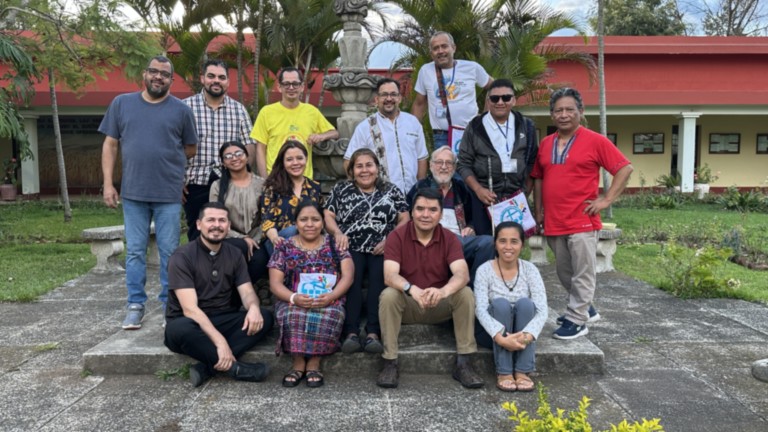
Although the Ad Gentes mission calls us especially toward peoples and contexts where the Gospel has not yet been proclaimed, our ability to participate in it is deeply connected to the way we live our faith within our own communities.
How can we proclaim reconciliation if we live divided? How can we speak of God's love if we are unable to listen to and welcome our brothers and sisters? How can we invite others to walk together if our communities are marked by individualism or competition?
These questions invite us to examine the consistency between what we proclaim and how we live.
Being “One in Christ, united in mission” must be expressed through concrete attitudes: listening with respect, overcoming conflicts through dialogue, sharing responsibilities, accompanying those facing difficulties, and working with other communities and institutions for the common good.
It also means creating spaces where young people, families, lay women and men, consecrated persons, and ordained ministers can contribute their gifts and participate actively in the life and mission of the Church.
Missionary communion is not built only through large gatherings or celebrations. It grows stronger through small, everyday gestures of fraternity, generosity, solidarity, and service.
A truly united community is not one where differences never exist, but one that learns to address them with love, respect, and a spirit of reconciliation.
When our communities become welcoming places where every person is valued and no one is excluded, we begin to make visible the Gospel we are called to proclaim.
A Shared Mission, Everyone's Responsibility
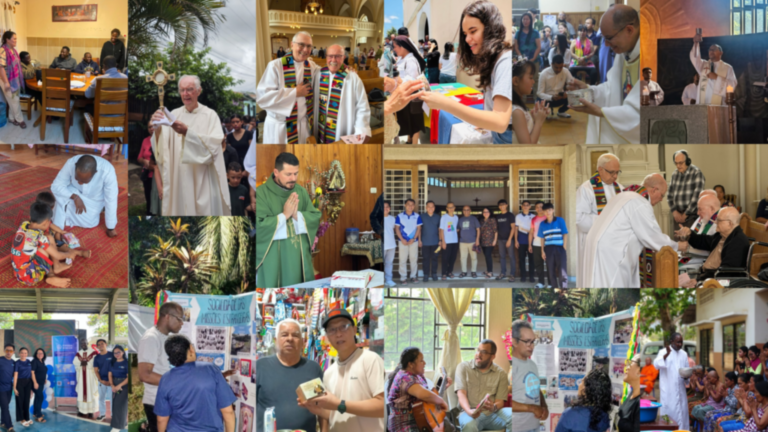
Mission Month reminds us that all baptized people are called to participate, according to their vocation, in the evangelizing mission of the Church.
Some receive a specific calling to go to other peoples and cultures, dedicating their lives to proclaiming the Gospel. Others participate through prayer, solidarity, accompaniment, missionary animation, and support for those who are sent.
These different forms of participation do not compete with one another; they complement each other and express the communion of the entire Church.
For the Quebec Foreign Mission Society, this invitation holds particular significance. Our missionary vocation calls us to walk alongside peoples, share their joys and hopes, listen to their suffering, and collaborate in building fraternal, open, and compassionate communities.
It is not simply about being present in different countries. It is about living a spirituality of encounter, communion, and service, recognizing that every people, every culture, and every person has something valuable to contribute.
Mission requires hands ready to serve, hearts open to welcome others, and communities capable of collaborating without seeking personal recognition.
Above all, it requires a constant attitude of prayer and discernment, so that our initiatives truly respond to God's will rather than merely to our own ambitions.
United in Mission, Sent Forth by Love
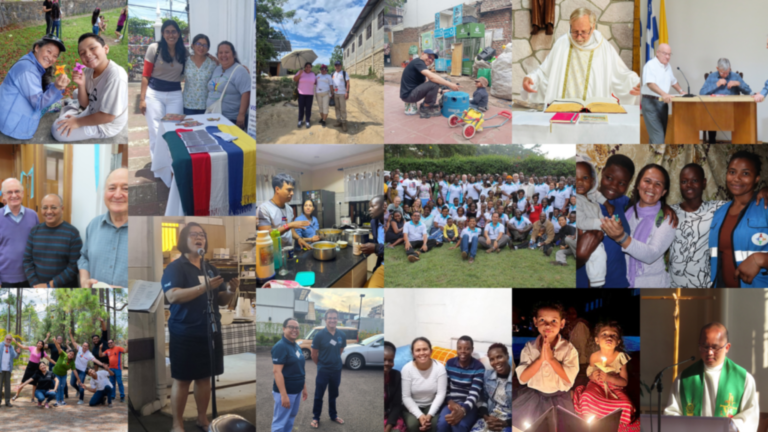
Celebrating the centenary of World Mission Day is not simply about remembering a history of evangelization. It is also an opportunity to renew our response to the call that Jesus continues to extend to us today.
The world needs communities capable of overcoming their divisions, building fraternal relationships, and offering a credible witness to God's love.
It needs missionaries who know how to listen, accompany, and serve. People who can build bridges where walls stand, bring hope where there is suffering, and foster reconciliation where wounds remain.
But above all, it needs witnesses who allow the Holy Spirit to act freely in their lives.
May this Mission Month help us sincerely ask ourselves: Are we building bridges or putting up walls? Are we working toward communion or defending our own interests? Are we allowing the Holy Spirit to guide our steps, or are we trying to impose our own ways?
May we renew our willingness to walk together, recognize the gifts of others, and place our abilities at the service of a mission that will always be greater than ourselves.
Because mission is not about us, but about God's love, which seeks to reach everyone through us.
And because being “One in Christ, united in mission” is not merely a theme to celebrate, but an invitation to live each day as brothers and sisters, building bridges and serving as instruments of the Holy Spirit.
Reflection inspired by Pope Leo XIV's message for the 100th World Mission Day, to be celebrated on October 18, 2026.
References
Pope Leo XIV — Message for the 100th World Mission Day (2026). A reflection on unity in Christ, missionary communion, and the mission of love.
Saint John Paul II — Encyclical Letter Redemptoris Missio (1990). See especially paragraphs 21 and 33, concerning the Holy Spirit as the protagonist of mission and the specific meaning of the Ad Gentes mission.
Second Vatican Council — Decree Ad Gentes on the Mission Activity of the Church (1965). The conciliar foundation of the Church's missionary activity.