Feast of Saint Thérèse of the Child Jesus

Baptized and sent: we are all missionaries
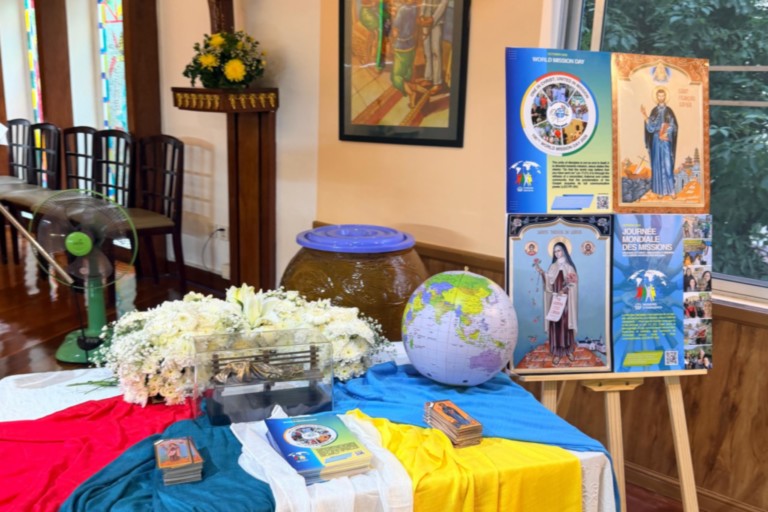
October is, above all, the missionary month. As we begin this time of grace, the Church reminds us that, simply by virtue of being baptized, we are all missionaries. We are not bearers of theories, but witnesses to the Risen One, witnesses to his living presence and entrusted with his commission: “Go into all the world and proclaim the Gospel” (Mk 16:15).
An October illuminated by great witnesses of faith

This October opens before us like a sky filled with stars, full of great examples of faithfulness and discipleship. This providential year unites us with the memory of Saint Francis of Assisi, as we commemorate the 800th anniversary of his passing into eternal life (1226–2026), reminding us of the urgency of stripping ourselves of everything to embrace evangelical poverty. The mystical steadfastness of Saint Teresa of Ávila also accompanies us and, in a very special way, we are preparing to celebrate World Mission Sunday, as we commemorate the centenary of its institution by Pope Pius XI in 1926.
Discovering the face of God: Love and Mercy
At the threshold of this missionary month, we remember with immense joy the Saint of Lisieux, our humble sister, Saint Thérèse of the Child Jesus and the Holy Face.
Thérèse lived in a century and at a time deeply marked by religious rigorism. French Catholicism at the end of the nineteenth century still bore the aftermath of Jansenism: a spirituality of fear, of dread of eternal damnation, strewn with scruples, puritanism and catastrophic preaching about the end of the world. Amid those thick walls of rigidity, our young Carmelite made her way with a unique boldness to discover the true face of God: Love and Mercy.
That confidence and that friendship with God did not arise in a vacuum; they took root within her family. It is only right to remember her parents, Louis Martin and Zélie Guérin, declared saints in 2015, and her sisters, especially Léonie, whose cause for beatification is underway. They were an extraordinary family not because they were free from problems, but because of their absolute faithfulness to God’s promises amid the most heartbreaking adversities of daily life.
The first stage of Thérèse’s life was filled with pain, loss, bereavement and premature separations, beginning with the death of her mother when she was only a little girl. Yet, with unwavering tenacity, she knew how to find God not in great manifestations, but in the simple, hidden and ordinary things of life. From this sprang her great existential cry: “My vocation is love!” She knew how to find Love, to be love, to remain in it and to believe firmly in it despite the dark night of faith she experienced.
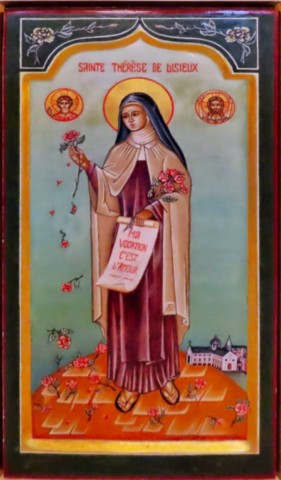
The Little Way: trusting God in our littleness
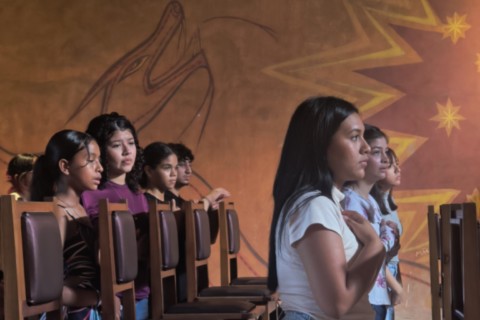
This is the “Little Path” — the Little Way of spiritual simplicity — that the young Thérèse gave us. Her words continue to enlighten us today with an overwhelming hope when she reminds us that Jesus does not ask great feats of us, but that we abandon ourselves into his hands, since his arms are like an elevator that lifts us up to heaven in our littleness. Thérèse overcame rigorism to restore to us the image of a God who is close, compassionate and faithful.
As we listen once more to her famous promise, “I want to spend my heaven doing good on earth,” we feel more than ever that she is our sister in mission. Today she smiles alongside us, who wish to follow in the footsteps of Jesus, whom she loved so much. Her mission was a mission of pure love: to proclaim, live and share God’s faithfulness.
Mission, a shared responsibility
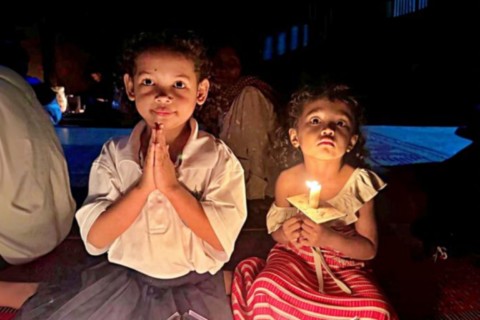
Thérèse revolutionized the concept of mission. At a time when missionaries were thought to have to be men and women of great intellectual gifts, giants of physical strength capable of venturing into distant lands, she — without ever leaving the enclosure of her convent — understood perfectly the shared responsibility for missionary work. She understood that every baptized person is called to carry the joy of the Gospel to the ends of the earth. That is why she taught us that the Church’s first missionary responsibility is not geopolitical strategy, but to renew and keep alive the spiritual and fraternal unity among its members.
What a great missionary animator Thérèse is! Her apostolic zeal was not theoretical; it was full of dynamism and action. Through her letters, she encouraged her spiritual brothers at the frontiers of the Church: Father Adolphe Roulland in China, to whom she sent photographs of herself holding the book of the missions as a sign of companionship; and Father Maurice Bellière, assigned to North Africa. She wrote poems, songs, letters to her uncle, short plays… and in each of these gestures beat the sole desire to make Jesus and his Good News known.
At the heart of the Church: the love that drives mission
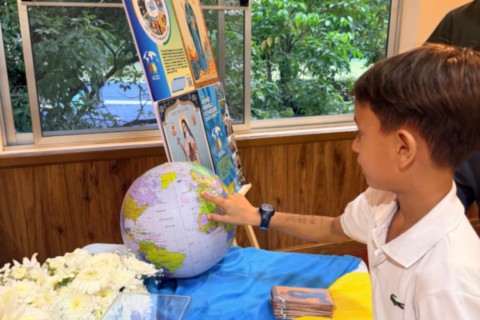
The life of Thérèse of the Child Jesus is a fascinating testimony to how the most ardent missionary desire can spring up and grow within the walls of a cloister. She herself described with overwhelming intensity the multitude of vocations she felt burning within her: “I have felt the vocation of a warrior, a priest, an apostle, a doctor, a martyr… I would like to travel the earth, preach your name and plant your glorious cross on unbelieving soil,” she wrote, longing to be a missionary not for a few years, but from the beginning of the world until its consummation. This torrent of desires, which she herself called her “martyrdom,” found its channel not in outward activity, but in love: she understood that, in the Mystical Body of Christ, she would be the heart from which would flow the love that impels all apostles and martyrs. Thus, her missionary zeal became a concrete and active force, demonstrating that contemplative life is not an escape from the world, but its deepest driving force.
Missionary animation: prayer and tangible fraternity
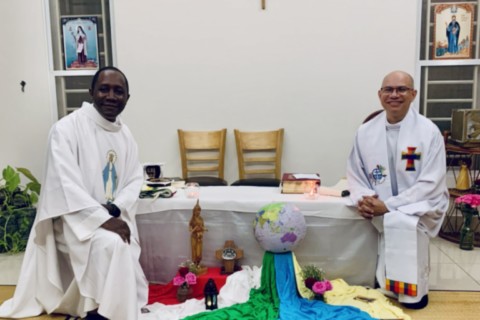
That force took the form of a revolutionary kind of “missionary animation” that she carried out from her cell, and which the Church recognized as a model. Her “animation” consisted not of speeches or strategies, but of tangible spiritual collaboration. She maintained a deep and mystical correspondence with two missionary priests: Father Adolphe Roulland, assigned to China, and Father Maurice Bellière, assigned to Africa. Through letters, she offered them not only prayer and sacrifice, but also signs of a tangible fraternity: she sent them her photographs, poems and even a lock of her hair as a relic of affection and spiritual communion. In this relationship, Thérèse did not seek to be merely an “apostle,” but an “apostle of the apostles”: her prayer and self-giving did not touch the missionary directly, but rather, through God’s grace, sought to set ablaze directly the hearts of those they evangelized. In this way, she embodied the true essence of missionary animation: the living reminder that the Church’s mission is the work of the whole Body, in which contemplative prayer and evangelizing action are inseparable.
Thérèse is a missionary animator because she understood that prayer is the fuel of evangelization. She is the great animator of priests, interceding for them in silence while they expend their lives at the ends of the world.
A heart close to the lands of Indochina
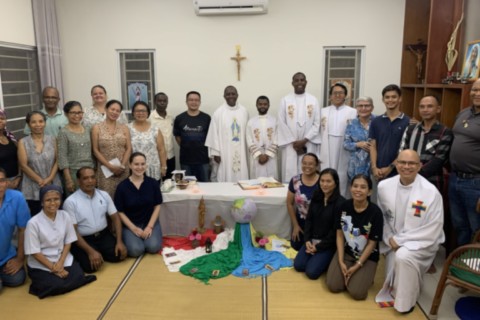
And today, in a very special way, we feel Thérèse extremely close to us, here in these lands of Indochina. In her time, she learned of and was deeply moved by the self-giving of the Martyrs of Vietnam — such as Saint Théophane Vénard, whom she admired so much. She herself dreamed of being sent to the Carmel of Saigon or that of Hanoi. Although her health prevented it, her heart remained here. That is why today we feel her alive, interceding for our local Church and for each one of us.
Saint Thérèse, universal patroness of the missions
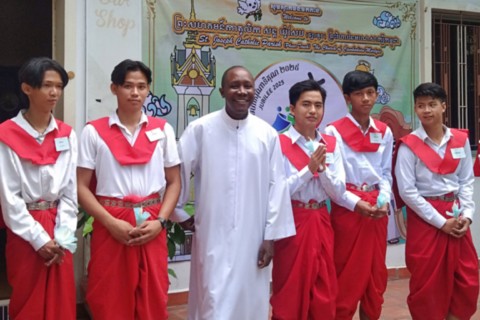
God willed that this simple testimony of Thérèse of the Child Jesus should be brought to the attention of the whole Church precisely at a crucial moment for universal mission. Pope Pius XI, who called her “the star of my pontificate,” beatified her on April 29, 1923, and canonized her on May 17, 1925. Shortly afterward, in 1926, the same Pontiff instituted World Mission Sunday, a day to awaken in all the faithful an awareness of their missionary responsibility. And in 1927, responding to requests from around the world, he proclaimed Saint Thérèse universal patroness of the missions, alongside Saint Francis Xavier. With this gesture, Pius XI definitively united the active life and the contemplative life in the same missionary zeal: Saint Francis Xavier, the tireless traveler who carried the Gospel to distant lands in Asia, and Saint Thérèse, the Carmelite who never left her cloister but who, from within it, sustained the mission through her prayer and her love.
A call to give our lives and trust in the Father
We make our own the words that Pope Leo XIV addresses to us for this day:
“For this reason, I wish to thank especially the men and women who are ad gentes missionaries today; people who, like Saint Francis Xavier, have left their homeland, their family and every security to proclaim the Gospel, bringing Christ and his love to places that are often difficult, poor, marked by conflict or culturally distant. They continue to give of themselves joyfully despite adversity and human limitations, because they know that Christ himself, with his Gospel, is the greatest treasure that can be shared. Through their perseverance, they show that God’s love is stronger than any barrier. The world still needs these courageous witnesses to Christ, and ecclesial communities still need new missionary vocations, which we must always hold in our hearts and for which we must continually pray to the Father. May he grant us the gift of young people and adults willing to leave everything to follow Christ on the path of evangelization to the ends of the earth.”
May Thérèse’s example set our hearts ablaze during this month of October. May we not be afraid of our littleness, but trust fully in the Father’s mercy.