Return to the Ordinary?

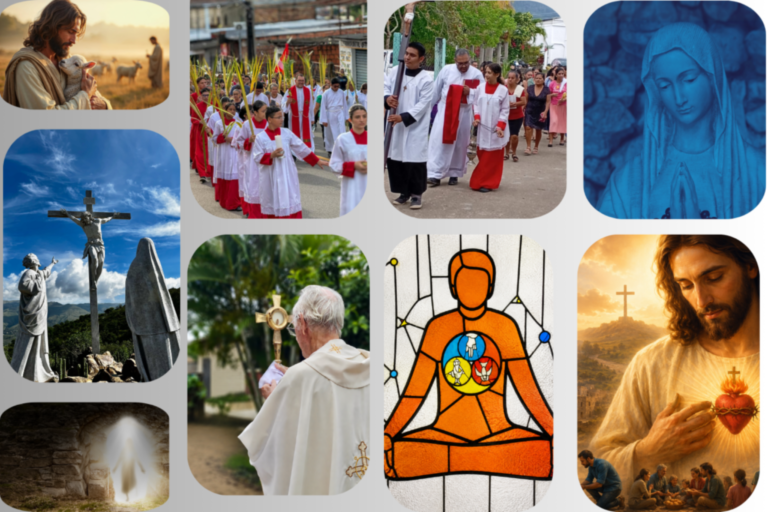
We have lived through intense liturgical seasons in recent months. With the Solemnity of Pentecost, we have returned to what the liturgy calls “Ordinary” Time. This season is not an empty time nor a pause without God. Rather, it is the daily rhythm in which the disciple learns to walk in the footsteps of the Master.
Ordinary Time introduces us to the semi-continuous reading of Scripture and reveals that daily life—with its small decisions, its hardships, and its simple joys—is the true place of discipleship.
“Ordinary,” therefore, means the space where the mystery of Christ desires to become incarnate once again: in work, in streets sometimes crowded with traffic, in family life, in encounters with our brothers and sisters, especially those who suffer.
We could say that Ordinary Time is a call to listen to the daily prayer of the world.
It is a return to “Nazareth.” There, in the routine of the carpenter’s workshop and in the silence of days that seem all alike, Jesus inhabited the ordinary and transformed it into a space of salvation. The ordinary has windows that open upward, and the liturgical celebration breaks into routine not to help us escape from it, but to reveal its deep and unconditional meaning.
From Pentecost to the Heart of Christ: A Cycle of Mercy

From Pentecost to the Solemnity of the Sacred Heart of Jesus—which we celebrate on the Friday after the second Sunday after Pentecost—the Church follows a path that is not a collection of isolated feasts, but a progressive immersion into Trinitarian love.
The Ordinary Time that begins after Pentecost includes solemnities that illuminate the very reality of Christian life:
- Trinity: God is a communion of love; Christian life enters into that source which is both gift and task.
- Corpus Christi: God’s love becomes broken Bread; Christ gives Himself sacramentally for the life of the world. He also invites us to become bread that is taken, blessed, and broken for others.
- Sacred Heart: that same love is contemplated as crucified and merciful love, accessible to the disciple who remains close to Him.
And at the end of the Ordinary Time cycle, the Solemnity of...
- Christ the King: history and daily life are oriented toward His final Lordship, which is service and liberation.
The Heart of Jesus is not a “disconnected celebration,” but the profound moment in which the Church learns to contemplate the mystery of Christ from within: from the heartbeat that sustained the cross, from the wound that still pours forth mercy.
The Beloved Disciple: Model of Listening and Contemplation
To make a missionary reading of this solemnity, we need to place ourselves beside John, the beloved disciple. The one who, at the Last Supper, rested his head on Jesus’ breast (John 13:23–25) and knew how to listen, not only with his ears but with his whole being, to the beating Heart of God made man. John remained at the foot of the cross when almost everyone else had fled (John 19:26–27).
There he contemplated the pierced side from which blood and water flowed (John 19:34), living signs of the Church and the sacraments, signs of a love that does not surrender to death.
From that humility—the humility of one who recognizes himself as loved without deserving it—every disciple is called to be John for today’s world. For only those who dare to listen to the silence of the One who is the Word (“Abide in me, as I abide in you,” John 15:4) can go forth on mission with a merciful heart.
Listening to the Heart: Gestures, Silences, Joy, and Suffering

Listening to the Heart of Jesus means learning to contemplate His gestures of mercy: the hand that touches the leper (Mark 1:41), the gaze that rests upon the widow of Nain (Luke 7:13), the words that restore dignity to the woman caught in adultery (John 8:10–11). But it also means entering into His silences: that silence before Pilate (Matthew 27:14 and John 18:38), when the governor questioned Him about who He was and what truth was. Jesus Himself is the One who is, the Truth, and only those who seek Him with humility can discover Him. That silence is not absence but fullness, because the one who remains silent out of love says more than all words.
We also discover Jesus’ sobs before the tomb of His friend Lazarus, sharing the suffering of Martha and Mary. And we discover His profound joy when the disciples return to Him: “I praise you, Father, because you have hidden these things from the wise and learned and revealed them to little ones” (Matthew 11:25). That same joy is not naïve; it sustains His gaze toward the “hour” that is to come, the hour of definitive self-giving. Everything in Him is hope, coherence, and abandonment, even as suffering approaches.
And above all, listening to the Heart means contemplating His agony and total abandonment to the Father. On the cross, Jesus not only dies: He gives up His spirit with a cry that is prayer: “Father, into your hands I commend my spirit” (Luke 23:46). There, in that dark night, the Son loves to the very end (John 13:1) and shows us that mercy is not a lukewarm feeling, but a force that passes through pain and injustice. From the perspective of liberation theology, that pierced Heart still beats today in the crucified peoples of history: in the poor, in the disappeared, in the victims of structural violence, in the victims of human trafficking, and in the cries of the earth. Therefore, to contemplate the Sacred Heart is to commit ourselves to His passion present in the people and the earth that suffer.
To be a missionary of the Heart of Jesus means:

- Going out to meet those who live in darkness (like Nicodemus), those who thirst (like the Samaritan woman), and those who do not belong to the chosen people (like the centurion). Not waiting for them to come, but going out to the peripheries.
- Listening attentively to the beats of the Heart in history: in the cry of the poor, in the cry of the earth, in the trampled dignity of migrants and prisoners.
- Allowing the character of Christ—gentle and humble of heart (Matthew 11:28–29)—to shape our way of responding to the evil of the world, not with condemnation but with reconciliation, not with indifference but with merciful justice.
- Contemplating the pierced side as a source of life, and proclaiming that from that wound there still flows today water that cleanses and blood that redeems.
Questions for Reflection
- In what “night” of my life do I need to allow the Heart of Jesus to speak to me as He spoke to Nicodemus, and how does that listening move me to go out and meet those who live in darkness?
- Where today (in my neighborhood, my workplace, or my family) is the “pierced side” of Jesus? Do I dare to place my ear upon the breast of the crucified people of our time in order to hear, through them, the merciful heartbeat of the Lord who sends me to proclaim liberation?
May the Heart of Jesus, gentle and humble, form our hearts in listening, compassion, and mission. Amen.