The vocation of the baptized: called to follow Christ and to shepherd with Him

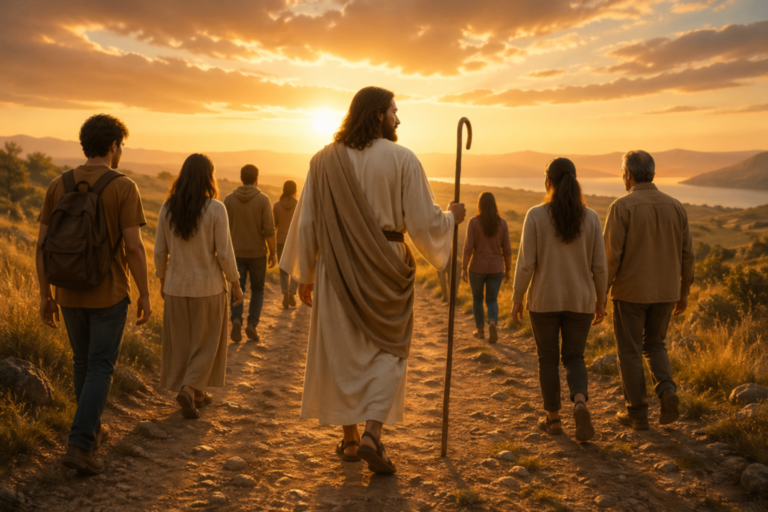
There is a beautiful Christmas tradition: a dance called Los Pastores. It comes from Spain and is still alive in some towns in Latin America. The shepherds dance with their eyes fixed on the Child Jesus, the Good Shepherd. In their dance, they recall that passage from Luke where the angels announce: “Today a Savior has been born to you; he is the Messiah, the Lord.” Christ is born as a Shepherd, with the smell of the sheep, in the midst of a stable. From the very beginning of His life, He identifies with the excluded, the marginalized, the least, the vulnerable… with the very shepherds themselves.
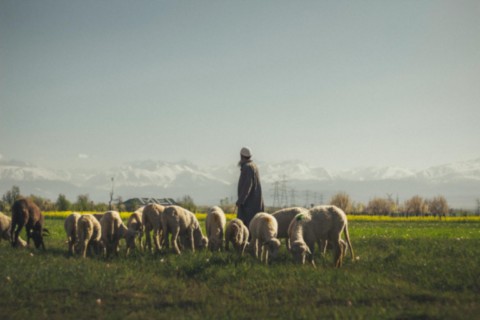
The pastoral tradition was very important in the Mediterranean and also in the ancient people of Israel, from which the biblical sources emerge. The prophets compared the people to a flock and God to the Shepherd. Jesus takes up these traditions and presents Himself as the Good Shepherd, the Beautiful Shepherd.
The way the disciples and apostles came to trust in the Risen Lord is a central theme of this Easter season. In the Book of Acts, which we read throughout the entire Easter season, we see how the followers of Christ, after Pentecost, are called to continue His work through the mission within the Church.
Everything that Jesus did in the Gospels, the apostles and disciples continue doing in Acts. And today, we—missionary disciples—are urged to continue that work because Jesus is alive among us. This is our calling as members of the Church. Just as we renewed our faith and baptismal promises on the holy night of Easter, in the same way the readings of this Easter season invite us to listen to the voice of Christ, the Good Shepherd, in our lives and to take up our mission within the Church. To be like those shepherds in the traditional dances: to keep our eyes on Jesus and our hope placed in the One who is the light of the world.
Easter is a time to become aware that, through Baptism, we are the Church. And what we expect the Church to do is precisely what we ourselves are called to do as members of the Body of Christ.
To emphasize this discipleship that belongs to all the baptized, each year, on the Fourth Sunday of Easter, the Church celebrates Good Shepherd Sunday and observes the World Day of Prayer for Vocations. This year, Pope Leo XIV, in his message for this day, invites us to look within. He tells us that the inner discovery of God’s gift is a moment of grace. For this reason, he shares with us some reflections on the interior dimension of vocation: that discovery of God’s free gift that blossoms in the depths of the heart.
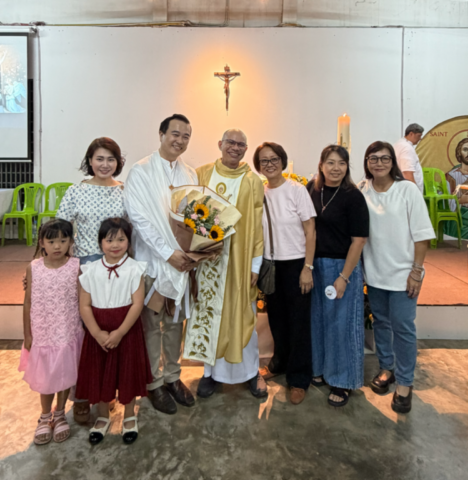
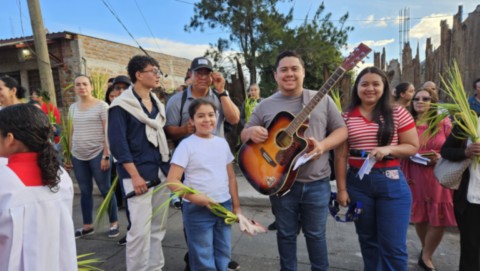
In his letter, the Pope speaks to us about caring for our interior life and about mutual knowledge. In Baptism, every Christian has been called by Christ, the Good Shepherd, to follow Him, to live in His presence here and now, and for all eternity in Heaven. Good Shepherd Sunday reminds us that every Christian has a vocation—a calling—to follow Christ. In the Church there are many different vocations, but all are born from the same love.
The Pope says: “Every vocation is an immeasurable gift for the Church and for those who receive it with joy. To know the Lord means above all learning to entrust oneself to him and to his providence, which is abundant in every vocation.”
Every Christian has a vocation and is called to live in response to Christ and His love. Just as those newly baptized at Easter are invited during this time to reflect on how they are living their call, so too all of us are invited to consider how we are living our own call and how we respond to the love of Christ.
The Pope continues: “Knowledge leads to confidence, a mindset that arises from faith and is essential both for welcoming one’s vocation and for persevering in it. Indeed, life reveals itself as a continual act of trusting in the Lord and abandoning ourselves to him, even when his plans unsettle our own.”
Let us consider Saint Joseph, who, despite the mysterious and unexpected pregnancy of the Virgin, trusted the divine message revealed in a dream and welcomed Mary and her child with an obedient heart (cf. Mt 1:18-25; 2:13-15). Joseph of Nazareth is an example of complete trust in God’s designs. He trusted even when everything around him seemed shrouded in darkness and uncertainty, when events appeared to diverge from his own plans. He trusted and abandoned himself to God, certain about the goodness and fidelity of the Lord. “In every situation, Joseph declared his own ‘fiat’, like those of Mary at the Annunciation and Jesus in the Garden of Gethsemane.”
But being part of the flock is not enough. Today, more than ever, urgency calls us to something greater. Jesus, the Good Shepherd, invites us not only to be sheep who listen to His voice, but also to become shepherds with Him. Because the very love that guides us also sends us. We have the inescapable responsibility to guide, accompany, care for, and walk alongside the most vulnerable. We are called to protect the vulnerable and restore their dignity as part of the holy people of God. Every baptized person, from their place in the family, at work, and in the community, is urged to reach out, to lift up the fallen, to restore hope to those who have lost it. That is what it means to shepherd: to imitate the Good Shepherd who lays down His life for His sheep.

“Dear brothers and sisters, dear young people, I encourage you to cultivate your personal relationship with God through daily prayer and meditation on the Word. Pause, listen and entrust yourselves. In this way, the gift of your vocation will mature, bringing you happiness and yielding abundant fruit for the Church and the world.”
And the Pope concludes:
“May the Virgin Mary, model of the interior acceptance of divine gifts and expert in prayerful listening, always accompany you on this journey!”