Journeying together in a wounded world

A Missionary inspiration after the DVP Convention
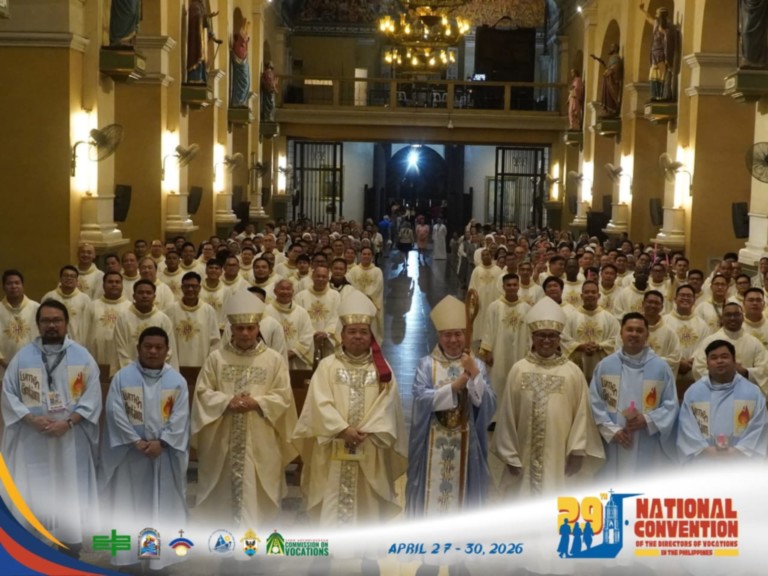
We have just returned from the 29th National Convention of the Directors of Vocations, hosted by the Jaro Diocese at Diversion 21 Hotel in Iloilo City, Philippines. The convention was attended by seven bishops, including the host, Archbishop of Jaro Most Rev. Midyphil B. Billones, whose homily at the opening Mass underlined the fact that “vocations naturally lead to service and mission, and mission naturally gives birth to the rise of vocations.”
From this convention, I carry with me not simply notes from the rich talks and homilies, but a renewed hope for my missionary engagement here in Asia. What I witnessed and heard compels me to write this article as an attempt to make these insights contagious.
A changing world and a wounded youth
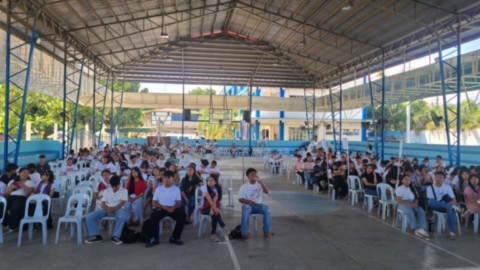
One truth that all seven bishops at this convention acknowledged is that “the mission field is changing rapidly, especially among the youth. If we do not adjust our approach, we risk speaking a language they no longer understand.”
While witnessing the shortage of priests and missionaries everywhere, we can also admit that today’s young people are not simply distracted; many are wounded. They come from broken families, carry emotional burdens, struggle with identity, and are constantly shaped by social media and peer pressure.
Their world is noisy, confusing, and often lonely. In such a context, vocation animation, and indeed all missionary work, cannot remain the same.
Vocation is born from witness
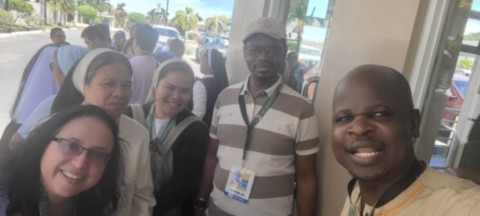
One of the strongest messages that emerged from the convention is that “vocation is born not from programs, but from relationships and witness.” During his talk, the bishop of Tandag diocese, Most Rev. Raul Dael reminded us that vocations are first nurtured in the family.
When children see their parents live with faith, love, and integrity, something is planted in their hearts. This challenges us deeply.
Bishop Raul asked the participants whether their lives as priests, religious, or lay animators are credible enough to inspire young people to leave everything and join them. If our communities do not reflect authentic Christian living, how can we expect young people to respond to God’s call?
Accompany rather than judge
Bishop Raul Dael also emphasized something very important: our role is not to force vocations, but to facilitate encounters.
Many young people today are confused. They are in what he called “situationships”—uncertain attachments, emotional struggles, and unstable relationships. He advised that we must not judge them quickly. Instead, we are invited to walk with them patiently, helping them encounter Christ in their woundedness.
The crisis of the world and the crisis of vocations
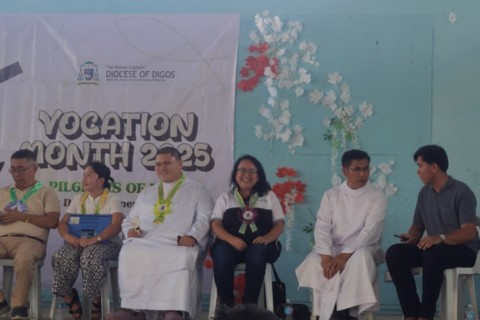
This approach becomes even more urgent when we consider the crises described by Most Rev. Jose Allan Dialogo, the bishop of Sorsogon diocese.
According to him, there is both an internal crisis which is declining vocations and an external crisis that is a world filled with conflict, economic pressure, and instability. These two crises meet in the hearts of young people. Many are afraid to commit. Others feel that serving the Church is impractical in a world that demands financial success.
But instead of seeing this only as a problem, we are invited to see it as a prophetic opportunity.
Speaking from my own personal experience, I note that vocations born in difficult times are often more resilient and more deeply rooted in faith. We can all agree that young people today are living in difficult times. What they need most is not an escape from the world, but a way to engage it with Christ. This means we must present vocation as a path of communion with God, with others, and with a wounded world.
A Crisis of Faith
Going Toward Today’s Peripheries
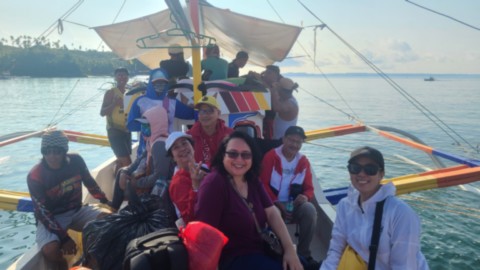
But where are the lost today? Not only in distant lands, but also in what he called the existential peripheries: young people who feel alone, families in crisis, and even the digital world. This is what I described in my thesis “The Evolution of the Catholic Church’s Presence in Quebec: From Priests from France to Priests from Africa” as the areopagi of evangelization today. It is common knowledge that social media is now a major space where young people search for meaning, identity, and belonging. If we are absent there, others will shape their hearts.
From our different missionary engagements, we can all agree that mission today requires us to go beyond physical presence. It requires listening, accompanying, and entering into the real struggles of people. Sometimes mission is not about preaching, but simply about being present as our General Assembly of 2013 reflected.
Recovering Interior Silence
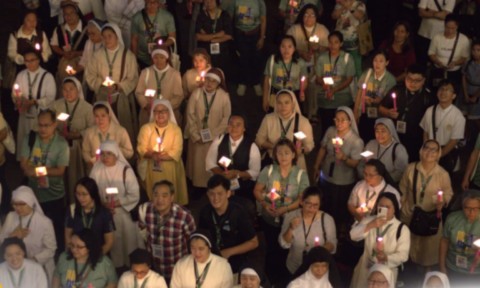
During the convention, we were guided to understand that if we want to help others discern their vocation, we must first recover silence, prayer, and interiority in our own lives. Without this, we risk forming individuals who are active but not rooted, expressive but not convinced; people who may become like encyclopedias, pretending to know everything while nothing is truly happening in their own lives.
Discerning Together with Young People
A Mission of Proximity and Authenticity
In addition, our missionary approach needs to shift from programs to witness. No strategy can replace the power of a joyful and authentic life. Our personal relationship with Christ, made visible in our relationships within the community, can be our strongest message.